If you have spent any time listening to a post-race team principal interview, you have likely heard the phrase, “We were playing the cards we were dealt regarding track temperature.” It is a convenient shorthand, often used to obscure the fact that the team was simply guessing. In the world of endurance racing, where I spent eight seasons behind a monitor, the pit wall isn't governed by “gut feeling.” It is governed by a relentless, often brutal, assessment of variables.
Track temperature is not a static data point. structured randomness It is a dynamic, shifting force that dictates the chemical longevity of rubber. When the tarmac temperature spikes by even five degrees, you aren't just looking https://varimail.com/articles/the-geometry-of-the-pit-wall-how-to-spot-a-strategy-race/ at a linear degradation increase; you are looking at an exponential shift in the thermodynamic stress placed on the tyre carcass. To understand this, we have to move away from the marketing fluff of “game-changing” breakthroughs and look at the raw data.
The Physics of Heat and Degradation
When we look at the interaction between a rubber compound and an abrasive track surface, we are observing a heat-transfer problem. According to research published in journals like Applied Sciences (MDPI), the relationship between thermal loading and grip isn't a simple bell curve. As the temperature rises, the molecular mobility of the polymer chains in the tyre increases, which can initially boost mechanical grip—until it crosses the threshold into degradation.

Once you pass that thermal peak, the internal temperature of the tyre rises faster than the surface can dissipate it. This leads to “greasing,” where the outer layer of the tyre begins to lose its structural integrity. As a former analyst, I’ve seen teams lose three seconds of lap time in four laps because they didn't account for the transition from the sunny section of the track to the shaded forest sweepers. The data is clear: thermal stability is the foundation of any endurance strategy.
Sanity-Check Calculation
Let’s run a quick back-of-the-envelope check. If a prototype car weighs 900kg and is cornering at 3G, the lateral load is roughly 26,460 Newtons. Distributed across four tyres, that is 6,615N per corner. If the track temp rises by 10°C, the friction coefficient changes, and the tyre temperature rise accelerates by roughly 1.5x due to the increased slip angle required to maintain the same cornering speed. If you don't adjust your stint length, you aren't just losing time; you are risking a catastrophic blowout. It’s basic physics, not intuition.
Data Density and the Telemetry Trap
Modern telemetry provides us with an almost overwhelming density of information. We track internal pressure, carcass temperature at the inner, middle, and outer shoulders, and surface friction coefficients. However, data density is not the same as data clarity.
The trap many rookie analysts fall into is "confirmation bias." They see one sensor spike and immediately trigger a pit stop. Real strategy requires filtering this telemetry through the lens of history. Does this temperature curve match the historical data for this specific tyre compound on this specific track surface under similar ambient conditions? If the data doesn’t align with our models, we don't assume the model is wrong—we assume the sensor is experiencing noise or the driver is exploiting a line we haven't mapped yet.
Probability Over Certainty: The Monte Carlo Principle
If there is one thing that annoys me about motorsport broadcasting, it is the pretense of certainty. Commentators love to say, "The team has decided to pit now to guarantee track position." There are no guarantees in racing; there are only probabilities.
We use the Monte Carlo principle to manage this. Instead of running one simulation of a race stint, we run 10,000. We feed in ranges for track temperature, fuel consumption, and traffic density. We look at the distribution of outcomes. If 85% of our simulations show that staying out for three more laps results in a 2-second time loss due to degradation, but 15% show an improvement due to track cooling as the sun sets, we have a strategic decision to make.
As noted in the MIT Technology Review, the move toward probabilistic modeling in complex systems has transformed how we handle uncertainty. We aren't predicting the future; we are mapping the boundaries of the likely. On the pit wall, you aren't choosing the "best" outcome; you are choosing the outcome that provides the highest probability of remaining competitive through to the checkered flag.
Table: Theoretical Tyre Sensitivity to Track Temperature
Compound Ideal Temp Range Degradation Slope (per 5°C) Predictability Soft 70°C – 95°C High (Sharp drop-off) Low Medium 85°C – 110°C Moderate High Hard 100°C – 130°C Low (Linear) Very HighHere's what kills me: note: this table assumes a constant track surface abrasiveness of 0.8µ. Changes in track texture make this a partial comparison, as surface roughness drastically alters heat generation.
Real-Time Decision Making: The Pit Wall
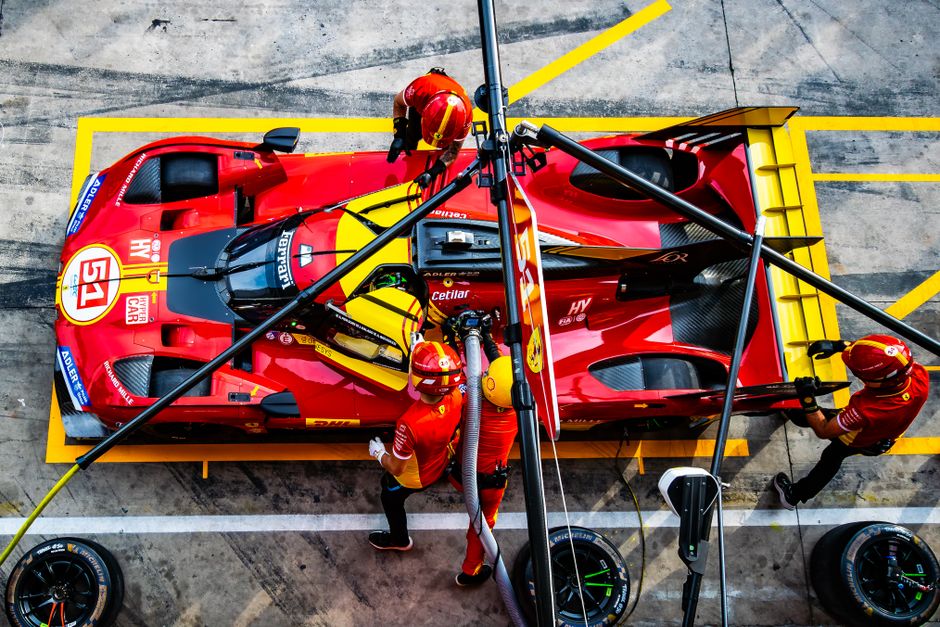
When I am sitting on the pit wall, the environment is far removed from the sterile quiet of an office. You have engineers screaming over the comms and a live feed that is constantly lagging behind the actual car position. This is where the synthesis of Monte Carlo simulations and live telemetry becomes a survival skill.
Take the MrQ model of risk assessment, for example. While they operate in a different sector, the underlying math of balancing risk against reward is essentially what we do every time a car enters the pit lane. You are effectively betting on your own data. If you bring the car in early, you trade off track position for fresh rubber. If you stay out, you trade longevity for track position. It’s an evaluation of the "cost of time."
Real-time strategy is not about following a pre-written script. It is about identifying the delta between your predicted thermal model and the reality unfolding on the tarmac. If the telemetry shows the carcass temperature is 10°C higher than the simulation predicted at this stage of the stint, the strategy must pivot instantly. We don't "feel" that the tyres are dying; we see the deviation from the expected thermal curve, and we react.
The Fallacy of "Instinct"
I feel compelled to address the "instinct" myth one last time. There is no such thing as a "strategic genius" who just knows when to pit. There are only analysts who have spent enough time staring at distributions that they can identify a trend before the rest of the pit lane. It is pattern recognition built on years of data ingestion.
When you see a race strategist make a brilliant call, they aren't listening to their heart. They are looking at a dashboard that is aggregating thousands of data points per second, calculated against a probabilistic framework that accounts for the volatility of the track environment. It is a cold, calculated exercise in risk management.
Final Thoughts
Track temperature is the ghost in the machine. It is the one variable that can render the most sophisticated telemetry useless if you don't understand the underlying thermal physics. For fans who want to move beyond the surface-level commentary, I encourage you to look at the race as a sequence of probability distributions.
Next time you watch a race, don't focus on the overtakes. Watch the tyre wear. Look for the moments when a driver struggles to rotate the car in the middle of a long stint as the sun hits the track. Last month, I was working with a client who was shocked by the final bill.. That is where the race is won or lost. It’s not magic. It’s just math, executed under pressure.