If you have ever listened to a team radio broadcast, you have likely heard a race engineer pivot from a "Plan A" to a "Plan B" within the span of three laps. Fans often mistake this for a sudden flash of brilliance or, worse, "gut instinct." Let me be clear: there is no such thing as a "game-changing" gut feeling in high-level endurance racing. If a strategy team relies on instinct, they are not strategizing; they are gambling.
The reality is far more clinical. Race strategy is a probabilistic system, not a deterministic one. We do not "stick to the plan" because the plan is merely a static projection of an environment that ceases to exist the moment the lights go out.
The Fallacy of the Static Plan
When teams prep for a race, they build a predictive model. They look at historical tire degradation, fuel burn rates, and expected weather windows. However, these inputs are not constants; they are variables with inherent distributions. If your tire degradation model predicts a 0.5-second loss per lap, but after five laps your telemetry suggests a 0.7-second loss, you aren't just "slower." You have entered a different probability space.
Let’s run a quick back-of-the-envelope check. If you are racing for 24 hours (1,440 minutes) and you are off your tire degradation target by just 0.2 seconds per lap, by the end of the race, you have drifted away from your predicted finishing window by a significant margin. At a pace of roughly 120 seconds per lap, that is a delta of 0.16% per lap. Over 700 laps, that drift compounds to over 100 seconds of unpredicted time. If your pit window is only 40 seconds wide, you are effectively racing a different race than the one you gamed out on Tuesday.
Data Density and the Pit Wall
The influx of data—what we call high-density telemetry updates—is the primary driver of why plans change lap by lap. Modern GT3 and prototype cars are essentially rolling sensor arrays. We aren't just looking at oil pressure anymore; we are monitoring brake disc temperatures, slip angles, and suspension travel metrics that correlate directly to tire carcass health.
The challenge for the pit wall is not a lack of data, but the "noise" within that data. As noted in research papers found in Applied Sciences (MDPI), the optimization of real-time control systems relies on filtering out transient anomalies—like a one-off lockup—from long-term trends, such as track surface evolution. If we react to every spike in the telemetry, we are reacting to noise. If racingsportscars we wait too long, we are behind the curve. We look for the trend line, not the point.
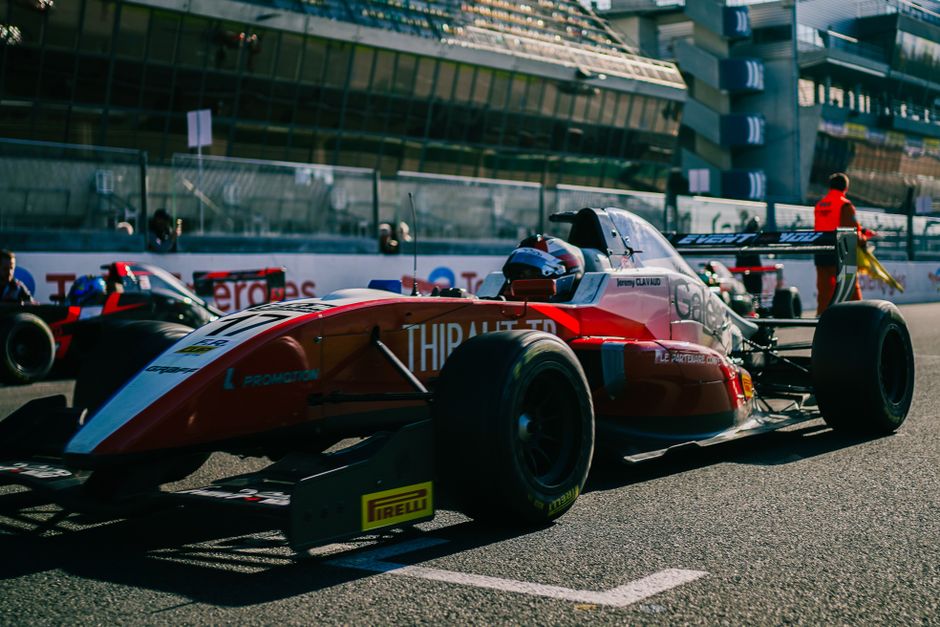
Probability Over Certainty
Strategy is fundamentally an exercise in risk management. When we sit on the pit wall, we are not asking "What will happen?" We are asking "What is the probability distribution of outcomes given our current position?"
This is where the Monte Carlo principle becomes the backbone of modern racing. Before the race, we run thousands of simulations—Monte Carlo iterations—to map out the likelihood of different scenarios. These simulations account for:
- The probability of Full Course Yellows (FCY). The variance in pit stop efficiency. The likelihood of traffic-induced time loss. The thermal degradation of the tires based on ambient air temperature shifts.
If the simulation shows that there is a 65% chance of an FCY within the next 45 minutes, and your fuel load makes a stop at 30 minutes "sub-optimal" but "safe," you hold the car out. If the telemetry shows your tire grip dropping off a cliff, that 65% probability of an FCY is no longer worth the risk of a blowout. The "plan" didn't change because of instinct; it changed because the risk-weighted outcome shifted.
Comparing the Approaches
It is worth noting that while some betting platforms like MrQ use similar predictive modeling to calculate live odds for race outcomes, they are dealing with a more closed system than a race engineer. In racing, we have "hidden variables"—we don't know exactly how much fuel the car behind us has, or if their driver is managing a mechanical issue they haven't reported. Therefore, any comparison between sports betting algorithms and race strategy is only partial; one deals with known odds, the other deals with a live, adversarial environment.
Variable Deterministic Approach (The "Static" Plan) Probabilistic Approach (The "Live" Strategy) Tire Life Fixed "X" number of laps. Expected value with standard deviation. Safety Car Ignored or treated as a binary "if/then." Treated as a Poisson process. Traffic Estimated average time loss. Monte Carlo simulation of density.The Role of Contingency Planning
A good strategy team isn't just reacting; they are executing a pre-calculated contingency. Every time a race engineer calls for a "Plan C," it is rarely a new idea. It is the implementation of a branch on a decision tree that was written two days before the race started.

Articles in the MIT Technology Review have frequently highlighted how AI can assist in these decision-making processes by identifying patterns that humans might miss. However, the human element remains vital. The machine provides the distribution, but the human must decide on the risk appetite. Are we playing for the win (taking high variance) or for the podium (taking low variance)?
Phase 1: Baselines. Establish the "nominal" race distance and fuel/tire parameters. Phase 2: Distribution Modeling. Run Monte Carlo simulations to see how the race unfolds under various FCY timings. Phase 3: Real-time Telemetry Overlay. Compare actual car performance against the nominal model. Phase 4: Threshold Trigger. Once the deviation crosses a pre-set threshold, initiate the contingency plan.Why "Instinct" is a Dangerous Narrative
I find it incredibly annoying when commentators attribute a successful pit wall call to "intuition." It undermines the thousands of hours of simulation work that happen in the background. If a strategist relies on their gut, they are ignoring the fact that they have a dashboard full of data that could tell them the truth.
Strategic success is the result of rigorous adherence to the math, combined with the discipline to change the plan as soon as the data shows the original assumptions have failed. It is not about being "game-changing." It is about being mathematically consistent when the environment becomes inconsistent.
The next time you see a car pit five laps earlier than "expected," don't assume the driver complained about tires. Assume that the delta between the telemetry and the predictive model hit a threshold that made staying out mathematically inferior. The plan changed because the math required it to.